

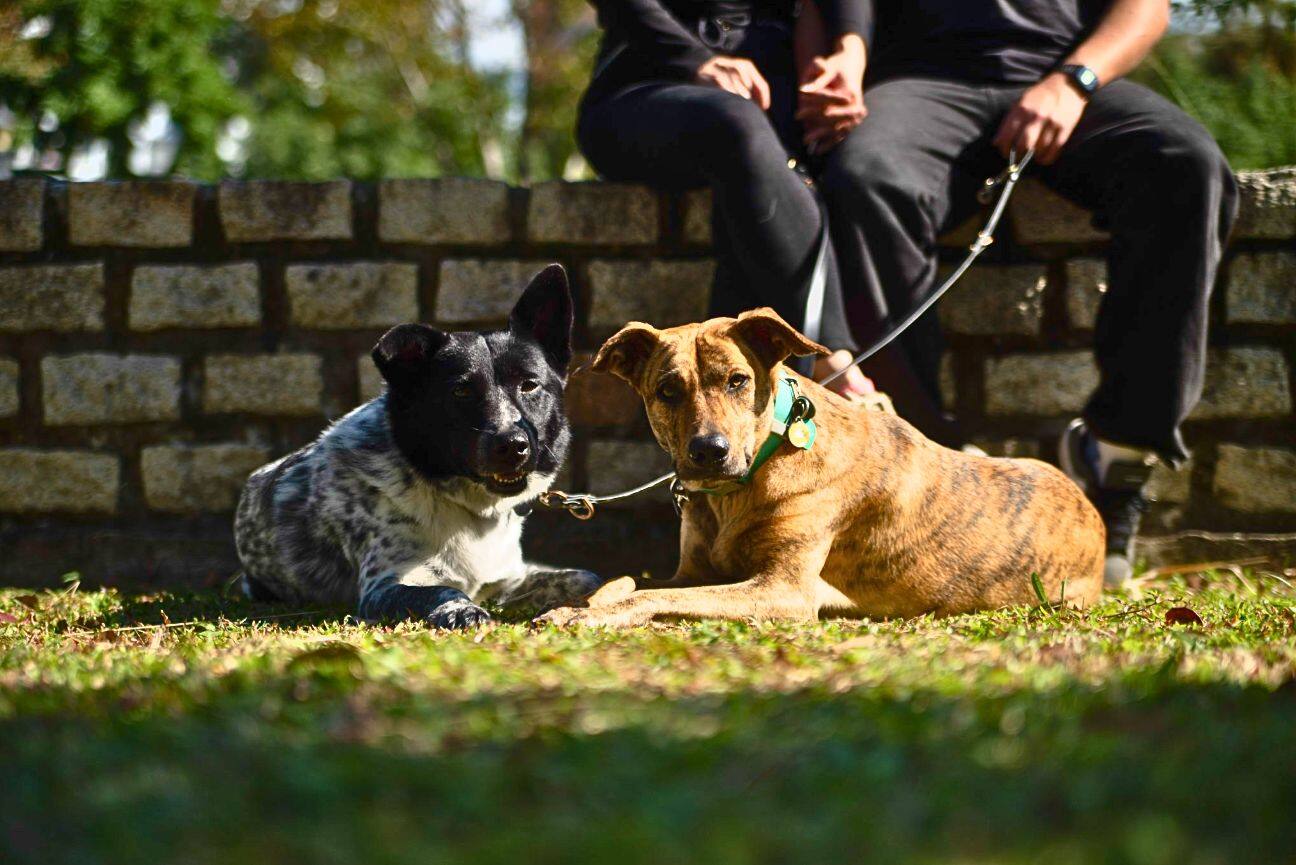
Moving abroad from France with your dog
A dog leaving France does not travel the same way to Berlin, London, Dubai or Sydney. The destination country sets the paperwork, the lead time and sometimes which breeds it admits; the airline decides, from your dog's weight and build, whether it flies in the cabin, in the hold or as cargo. This page covers what is specific to dogs, and what we organise for you.
Updated · official sources at the bottom of the page
What changes with the destination
The departure-side steps in France (vet visits, certificates, endorsement by the official veterinary services) are covered on our page on taking a pet abroad from France. For a dog, start by working out which group your destination falls into: that is what decides how long the preparation takes.
| Destination | Examples | What is usually required | Realistic lead time |
|---|---|---|---|
| European Union | Germany, Belgium, Spain, Italy, Netherlands | Microchip, valid rabies vaccination, EU pet passport; tapeworm treatment for Ireland, Malta, Finland and Northern Ireland | A few weeks if the vaccination is current |
| Countries with "open" rules | United Kingdom, Switzerland, United States, Canada | Country-specific paperwork, but no titre test and no quarantine for a dog leaving France | One to two months, longer if a cargo booking is needed |
| Strict countries | United Arab Emirates, Singapore, Hong Kong, Japan, Australia, New Zealand | Rabies antibody titre test, import permit, certificate signed by the official veterinary services, sometimes quarantine and compulsory cargo | Three months to well over six |
Rules that catch owners out
- United Kingdom (Great Britain): a French-issued EU pet passport is accepted, but a vet must treat the dog for tapeworm between 24 hours and 5 days before it enters. By air, it must travel as cargo unless you charter a private plane or it is an assistance dog. See France ⇄ United Kingdom.
- United States: the CDC does not class France as high-risk for dog rabies. A dog that has only been in low-risk countries over the past six months must be at least 6 months old, carry a readable microchip and travel with the receipt of the CDC's online Dog Import Form. See France ⇄ United States.
- United Arab Emirates: France is not on the UAE ministry's (MOCCAE) list of low-risk countries. A dog leaving France therefore needs a favourable rabies titre test, an import permit valid for 90 days, and must be at least 15 weeks old; an individual may import no more than two pets a year. See France ⇄ United Arab Emirates.
- Australia and New Zealand: titre test, permit, quarantine on arrival (10 days minimum) and travel as manifested cargo, into Melbourne only for Australia and into Auckland or Christchurch for New Zealand. The Australian authorities advise allowing at least six months. See France ⇄ Australia and France ⇄ New Zealand.
Moving from the EU to an unlisted country does not stop you coming back, but the return trip is prepared before you leave: a titre test done in France and recorded in the passport spares your dog a three-month wait before it can re-enter. The month-by-month timeline of an expatriation is in our guide to moving abroad with a dog.
Large dogs: hold, cargo and weight limits
The cabin is for small dogs only. As of 19 October 2026, Air France accepts a dog or cat in the cabin only up to 8 kg including the bag, in a soft bag no larger than 46 × 28 × 24 cm. Above that, the airline's official page is explicit: dogs from 8 to 75 kg must travel in the hold.
- In the Air France hold: up to 75 kg including the crate, in a rigid plastic or fibreglass crate held together with bolts and meeting IATA requirements. Up to three animals per passenger, a number that may be lower depending on the aircraft. Book at least 24 hours before departure.
- Other airlines set lower limits: 45 kg including the crate in the hold on Air Canada and Air Transat, as of 19 October 2026. Above that, Air Canada sends you to its cargo service.
- Some airlines no longer take dogs in the hold: according to their official pages consulted on 19 October 2026, Delta, United and American Airlines keep the hold or cargo for specific cases (US military or diplomatic staff on assignment). Other dogs can only fly in the cabin with Delta and United, or through American Airlines' cargo service.
A very large dog, a dog heading for a "cargo only" destination (Great Britain, Dubai, Hong Kong, Australia, New Zealand) or a dog not flying on the same flight as you goes as air cargo. How that works, the paperwork and who does what are explained on our pet air cargo page.
Whether in the hold or as cargo, connections matter. Air France requires a minimum connection of 4 h 30 at Paris-Charles de Gaulle and 3 hours at Orly for a pet in the hold, with counter check-in on each flight. Wherever possible, we recommend a direct flight.
Snub-nosed breeds: fewer options
Bulldogs, pugs, boxers and Pekingese cope badly with heat, and IATA advises against flying them in the hot season. Airlines have turned this into strict rules, to be checked for every flight:
- Air France does not carry snub-nosed animals in the hold on flights it operates. Its list has 19 dog entries, including all boxers, bulldogs, pugs, dogues and mastiffs, the Cane Corso, the Chow Chow, the Shar Pei and the Staffordshire Bull Terrier. The cabin remains possible for a small dog, after advice from your vet.
- Air France cargo: the airline's page says cargo is still possible for breeds such as the Boxer, Pekingese or Shih Tzu, but that pugs, bulldogs and Boston Terriers have not been accepted as freight since 15 July 2019.
- Elsewhere: Delta refuses snub-nosed dogs and their mixes; Air Canada does not carry them in the hold; Air Transat accepts them with a signed waiver and a crate one size up.
- The crate: IATA rules require a crate 10% larger for these breeds.
For a French Bulldog over 8 kg, there is sometimes simply no workable flight. We then look for an airline and a season that fit, or tell you plainly that the move cannot be done by air.
French category dogs and breed bans abroad
If your dog is category 1 or 2 in France
French law bans category 1 dogs from entering France, even in transit. A category 1 dog that leaves France can therefore neither connect through Paris on the way back nor return. On departure, Air France refuses it in every mode of transport. According to the French agriculture ministry and Air France, category 2 dogs travel on Air France cargo flights; on request and subject to availability, they may take the same flight as their owner, in an approved crate bought for the purpose.
A dog that is legal in France can be banned elsewhere
Every country has its own list, and it does not match the French categories. A few examples read in official texts:
- Germany: federal law bans bringing in Pit Bull Terriers, American Staffordshire Terriers, Staffordshire Bull Terriers, Bull Terriers and their crosses, including from another EU country, with narrow exceptions (visits of under four weeks, assistance dogs). Each Land adds its own list. See France ⇄ Germany.
- Great Britain: Pit Bull Terriers, Japanese Tosas, Dogos Argentinos, Filas Brasileiros and XL Bullies can enter only with a valid British Certificate of Exemption.
- United Arab Emirates: the list includes the Staffordshire Bull Terrier, American Staffordshire Terrier, American Bully, Cane Corso, Dogue de Bordeaux, Bullmastiff and Boerboel.
- Australia, New Zealand, Singapore, Hong Kong: all four ban pit bull types, the Tosa, the Dogo Argentino and the Fila Brasileiro; Singapore also bans the Akita, the Staffordshire Bull Terrier and the American Bulldog, among others.
- Switzerland: dogs with cropped ears or docked tails cannot be imported, except in a house move arranged with customs, and some cantons have their own lists. See France ⇄ Switzerland.
The Staffordshire Bull Terrier shows the trap well: it is not a category dog in France, yet it is banned from Germany, the UAE and Singapore, and it is on Air France's snub-nosed list. We check your dog's breed before you spend anything.
The travel crate
In the hold and as cargo, your dog travels in a rigid crate large enough to stand, sit up, lie down naturally and turn around. Airlines apply IATA's requirements: bolted shell, metal door, ventilation on all four sides, a water bowl that can be filled from outside, "Live Animals" labels. The details are on our airline pet crates page, and the measuring method in our IATA crate size guide.
We recommend buying the crate several weeks before departure and getting your dog used to it step by step: a dog that knows its crate travels more calmly. IATA discourages sedation in transit; only give it on your vet's advice.
Example timeline: a 25 kg dog from Paris to Dubai
A worked example based on the UAE's rules and Air France's, as read on 19 October 2026. For your own move, we recalculate every date from your arrival day.
-
Check the breed and the plan as soon as the destination is known
Breed not on the UAE list, no more than two pets per person per year, dog at least 15 weeks old.
-
Microchip, rabies and core vaccinations as early as possible
The UAE also requires vaccination against distemper, parvovirus, infectious canine hepatitis and leptospirosis. Nothing to redo if everything is current.
-
Rabies titre test at least 21 days after a primary vaccination
A blood sample tested by an approved laboratory (in France: ANSES Nancy, LD 31 or Inovalys). The result must reach 0.5 IU/ml; it stays valid for 365 days as long as vaccination is continuous and no new booster is given, otherwise the test must be repeated.
-
Import permit within 90 days of arrival
Applied for online with MOCCAE; it is valid for 90 days, and a pet cannot enter on an expired permit.
-
Cargo booking several weeks ahead
Into Dubai, Air France and Emirates accept animals only as cargo; the booking goes through a partner freight forwarder.
-
Parasite treatments and health certificate within 14 days of the flight
Internal and external treatments recorded on the certificate; certificate signed or endorsed by the official veterinary services of the département (DDPP), by appointment.
-
Departure and arrival
The dog is handed over at the cargo terminal; in Dubai, the airport quarantine centre checks the documents and then issues the release permit.
Frequently asked questions
My dog weighs 30 kg: can it fly on the same flight as me?
Yes, with airlines that take dogs in the hold and to destinations that do not require cargo. On Air France, as of 19 October 2026, a dog of up to 75 kg including the crate can travel in the hold on your flight. To Great Britain, Dubai or Australia, it will travel as cargo, possibly on the same aircraft as you.
Does my dog need a rabies titre test to leave France?
Not for the EU, the United Kingdom, Switzerland, the United States or Canada. The UAE, Singapore, Japan, Australia and New Zealand require one, sometimes with long waits: Japan only admits the animal 180 days after the blood sample, and for Australia the 180 days run from the date the laboratory receives the sample. Even where it is not required, a titre test done in France can make the return from an unlisted country easier.
Can my dog travel without me?
Yes, as cargo. To remain a non-commercial movement, which matters most when coming back into the EU, the dog must travel within five days before or after you, under the responsibility of a person you have authorised in writing. The destination may have its own rules: Singapore, for example, imposes home quarantine if the pet does not arrive within five days of its owner.
My dog is category 2 in France: can it come with us?
French rules do not stop it leaving France. By air, it travels on Air France cargo flights, or on your flight on request and subject to availability. The destination then has to accept it: Rottweilers and American Staffordshire Terriers appear on several foreign lists. We check before any booking.
How far ahead should I start?
Allow a few weeks for the EU if the vaccination is current, one to two months for the UK or North America, three months or more for the UAE or Singapore, and at least six months for Australia, New Zealand or Japan.
What we organise for your dog
On this route, we can take care of:
- Checking your dog's breed, weight and age against the destination, any transit countries and the airlines
- Building the vet timeline (vaccinations, titre test, treatments, certificate) back from your arrival date
- Preparing and reviewing the documents, and helping you with the DDPP certification appointment
- Choosing hold or cargo and the routing, then booking with the airline or through a partner freight forwarder
- Coordinating, subject to availability, the trip to the airport and help on arrival with our partners
Some services (road transport, arrival assistance) go through partners and depend on availability: every quote states who does what.
Official sources
The rules above come from the texts and pages of these authorities. Last checked: .
- Règlement délégué (UE) 2026/131 — mouvements non commerciaux d’animaux de compagnie
- Commission européenne — FAQ chiens, chats et furets (personne autorisée, délai de cinq jours)
- Ministère de l’Agriculture — Les chiens de catégorie 1 et 2 et les chiens dangereux
- Air France — Voyager avec son animal (chien, chat)
- Air France — Liste des animaux à nez retroussé
- Air Canada — Voyager avec votre animal
- Air Transat — Animaux de compagnie et chiens d’assistance
- Delta — Shipping your pet
- United — Traveling with pets
- American Airlines — Pets
- Emirates — Rules and charges for travelling with animals
- IATA — Container Requirement 1, Live Animals Regulations, 52e édition (2026)
- IATA — Traveler’s Pet Corner
- GOV.UK — Bring your pet dog, cat or ferret to Great Britain
- GOV.UK — Banned dogs
- Allemagne — Hundeverbringungs- und -einfuhrbeschränkungsgesetz (HundVerbrEinfG)
- Allemagne — Hundeverbringungs- und -einfuhrbeschränkungsverordnung (HundVerbrEinfVO)
- OSAV / BLV — Voyager avec des chiens, des chats et des furets
- CDC — Entry requirements for dogs from dog rabies-free or low-risk countries
- MOCCAE (Émirats arabes unis) — Import of pets (cats / dogs)
- AVS (Singapour) — Veterinary conditions for the importation of dogs and cats, Schedule II
- AFCD (Hong Kong) — Conditions du permis spécial, groupe II (DC-02v05)
- MAFF (Japon) — Import of dogs and cats from non-designated regions
- DAFF (Australie) — Bringing a dog from a Group 3 country
- MPI (Nouvelle-Zélande) — Import Health Standard: Cats and Dogs 2026
- Ministère de l’Agriculture — Liste des laboratoires agréés pour le titrage antirabique
Rules change. Before anything is booked, we reconfirm every requirement with the authorities, the airline and the vet for your pet and your itinerary.
Read next
Is your dog moving abroad?
Tell us the destination, your planned date and your dog's breed, weight and age: we check what is possible and send you a timeline and a detailed quote.