

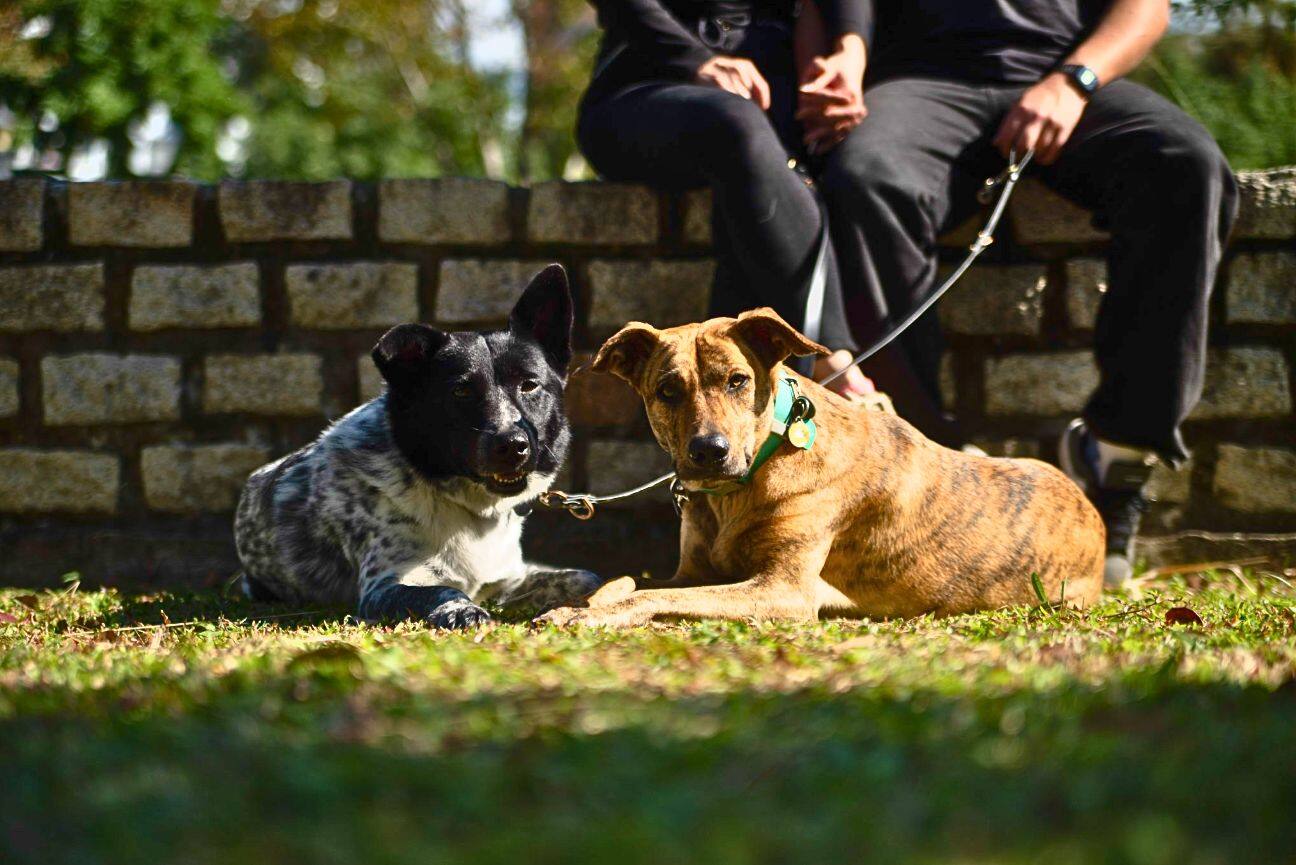
Moving with a pet
Moving a dog or cat to France’s overseas territories
Between mainland France and Guadeloupe, Martinique, Réunion or Mayotte, a dog or cat needs very little health paperwork. French Guiana makes rabies vaccination compulsory. New Caledonia, French Polynesia and Wallis and Futuna are outside the EU: they ask for an import permit, a rabies titre test and months of preparation, and New Caledonia adds 10 days of quarantine on arrival. Here is what each authority publishes, followed by what the airlines accept.
Updated · official sources at the bottom of the page
At a glance, territory by territory
"Case by case" marks a territory whose authority publishes no rule we have been able to read: we then check directly for your move.
| Territory | Status | From mainland France | Back to mainland France |
|---|---|---|---|
| Guadeloupe | In the EU | Microchip; over 8 weeks old if travelling without its mother | Same conditions as on the way out |
| Martinique | In the EU | No local rule published: case by case | Case by case |
| Réunion | In the EU | No specific requirement published: case by case | Case by case |
| Mayotte | In the EU | Microchip and EU pet passport | Same conditions as on the way out |
| French Guiana | In the EU | Rabies vaccination compulsory | Case by case |
| Saint Martin | In the EU | Arrival through Sint Maarten: Dutch-side import authorisation | Case by case |
| New Caledonia | Outside the EU, Annex II | Permit, titre test, blood tests, cargo, 10 days’ quarantine | EU health certificate, no titre test |
| French Polynesia | Outside the EU, Annex II | Permit, titre test, manifested cargo, inspection in Tahiti | EU health certificate, no titre test |
| Wallis and Futuna | Outside the EU, Annex II | Quarantine in New Caledonia first, then a Wallis permit | EU health certificate, no titre test |
| Saint Pierre and Miquelon | Outside the EU, Annex II | Microchip, rabies vaccination, health certificate under 10 days old | EU health certificate, no titre test |
| Saint Barthélemy | Outside the EU, not listed | No local rule published: case by case | Titre test required |
Coming back from an Annex II territory, the EU pet passport can stand in for the health certificate in one specific case, explained in the section on the return journey.
Inside or outside the EU: why the rules differ
The EU treaties apply in full to Guadeloupe, French Guiana, Martinique, Mayotte, Réunion and Saint Martin, the EU’s "outermost regions" (Article 355 of the Treaty on the Functioning of the European Union). New Caledonia, French Polynesia, Wallis and Futuna, Saint Pierre and Miquelon and Saint Barthélemy are "overseas countries and territories", only associated with the Union (Annex II to the same Treaty). Under EU pet-travel law they count as third territories.
The outermost regions
Delegated Regulation (EU) 2026/131 governs pets moving from one Member State to another. A flight from Paris to Pointe-à-Pitre never leaves France, so each local DAAF (the agriculture and food directorate) sets its own conditions for trips to and from the mainland, and they are often lighter than for travel within Europe. Guadeloupe, for example, does not ask for a rabies vaccine or a passport when a dog flies in from Paris, but requires both for a dog arriving from Germany or French Guiana.
The overseas countries and territories
Four of them appear in Annex II to Implementing Regulation (EU) 2026/636: New Caledonia, French Polynesia, Saint Pierre and Miquelon, and Wallis and Futuna. A dog or cat travelling from one of them to mainland France therefore needs no rabies titre test. Saint Barthélemy is on neither list, so a pet coming back from there does need one, as from any unlisted country. In the other direction each territory sets its own entry rules, and New Caledonia and French Polynesia take months to prepare for. The steps of a departure from France are set out on our page on moving abroad from France with a pet.
Category 1 dogs are banned everywhere. France’s Ministry of Agriculture states that bringing them into France is prohibited, even in transit. The authorities of Guadeloupe, Mayotte, Saint Pierre and Miquelon and French Polynesia confirm the ban for their territory. Rules for category 2 dogs differ from one territory to the next, and the ministry adds that they may fly only on Air France flights and on cargo flights.
The Antilles, French Guiana, Réunion, Mayotte and Saint Martin
Guadeloupe
For a dog, cat or ferret travelling between mainland France and Guadeloupe, the DAAF of Guadeloupe asks for a microchip and, if the animal travels without its mother, an age of more than 8 weeks. The same conditions apply when leaving Guadeloupe for the mainland. These rules cover up to five animals travelling with their owner and not intended for sale.
A pet arriving from French Guiana or another EU country is treated differently: it must be over 12 weeks old, with a valid rabies vaccination and a passport. Category 1 dogs are banned by a prefectoral order of 11 March 2002. A category 2 dog must be registered with the French pedigree book (unregistered Rottweiler types excepted), microchipped, and have a passport and valid rabies vaccination; its owner needs a dangerous-dog licence (permis de détention) from their town hall.
Martinique
The DAAF of Martinique’s page on travelling with a pet, updated in July 2026, points to national and EU rules and gives no condition specific to trips from or to the mainland. We therefore check this for each move. Air Caraïbes and Corsair, whose conditions we have read, do not ask for a rabies certificate on this route, but both require a microchip.
Réunion
The DAAF of Réunion says that pets travelling with passengers are checked by customs, and refers to the ministry’s note on pets arriving from non-EU countries for the health conditions. It publishes nothing specific for pets arriving from the mainland, so we check this for each move. Corsair does not ask for a rabies certificate on its Paris to Réunion flights. The DAAF also points out that invasive non-native animal species may not be brought onto the island (order of 28 June 2021): check this if you are moving with any animal other than a dog or cat.
Mayotte
The DAAF of Mayotte’s information sheet asks, for a pet coming from mainland France or another overseas department, for a microchip and an EU pet passport. It requires rabies vaccination only for pets coming from another EU country or from further afield, and applies the same conditions on departure. The sheet still cites the EU regulations replaced in April 2026, so we confirm these conditions with the DAAF before every move.
Category 1 dogs are banned. A category 2 dog is admitted only if neutered, with the prefect’s authorisation (order no. 2014-6571), and with the dangerous-dog licence, valid rabies vaccination, liability insurance, the owner’s training certificate and a behavioural assessment.
French Guiana
Rabies circulates in French Guiana among vampire bats. The Ministry of Agriculture explains that an order of 5 September 2008 makes rabies vaccination of domestic carnivores compulsory there, and that dogs and cats brought into French Guiana must be vaccinated against rabies. Air Caraïbes notes that the vaccine becomes valid 21 days after the first injection. A pet that has never been vaccinated therefore needs the jab at least three weeks before departure, and no earlier than 12 weeks of age.
Coming back is less straightforward. Guadeloupe treats a pet from French Guiana like one from another EU country (vaccine and passport), New Caledonia does not count time in French Guiana as residence in France, and Air Caraïbes asks at check-in for a rabies certificate for any pet coming from French Guiana. We have found no official page setting out the conditions for taking a pet from French Guiana to mainland France, so we check them for each move.
Saint Martin
The international airport is on the Dutch side, in Sint Maarten, which is a third territory. The French ministry’s June 2026 note says that travellers heading for the French side must obtain an import authorisation from the Dutch side, even for the short drive from the airport to their home. Air Caraïbes says the form must reach the Sint Maarten authorities no later than 4 days before each flight, and that without a validated authorisation the animal is quarantined or sent back. We have not found an official page on the French side’s own rules or on the return to the mainland, so we check them for each move.
New Caledonia, French Polynesia, Wallis and Futuna
New Caledonia’s veterinary authority (DAVAR) describes New Caledonia as rabies-free and lists French Polynesia and Wallis and Futuna among the rabies-free Pacific countries. To stay that way, these territories accept a dog or cat only with an import permit, a rabies titre test and travel as cargo. How the titre test works is explained in our article on the rabies vaccine and titre test.
New Caledonia
Under order no. 2014-333/GNC, every dog or cat imported into New Caledonia needs an import permit, must meet a health certificate written for its country of origin, and spends 10 days in the public quarantine station on arrival. France is one of the approved countries. The SIVAP protocols for dogs (March 2023 version) and cats require:
- Six months in France immediately before departure, with no visit to another country. Mayotte and the overseas departments count as France, except French Guiana.
- A microchip implanted before the rabies vaccine.
- A rabies vaccination still valid one month after arrival. A primary vaccination must be more than 6 months old.
- A rabies titre test of at least 0.5 IU/ml, from a blood sample taken more than 3 months and less than a year before departure, with no break in vaccination, at an approved laboratory. DAVAR rejects results from any other laboratory.
- Other vaccinations up to date: distemper, infectious canine hepatitis, parvovirus, kennel cough and leptospirosis for a dog; cat flu (calicivirus and herpesvirus), panleukopenia and chlamydia for a cat. Any booster must be given more than 14 days before departure.
- For dogs, a blood test within 45 days of departure for ehrlichiosis, brucellosis, leishmaniasis and babesiosis. A positive result for leishmaniasis, brucellosis or Babesia gibsoni makes the dog ineligible.
- Parasite treatments given by a vet. For fleas and ticks, a long-acting product started at least 21 days ahead (before the blood test for a dog, before departure for a cat) and renewed without a gap until quarantine ends. For worms, two treatments at least 15 days apart, the first within 45 days and the second within 7 days of departure.
- A vet visit within 7 days of departure with a vet holding a French state mandate (vétérinaire sanitaire), who completes the certificate; an official vet countersigns it and it is emailed to SIVAP.
The permit is issued within 12 working days of a complete application. The application includes a deposit of 15,000 CFP francs (€125.70) per animal to book the quarantine place (SIVAP protocols, checked on 4 November 2026). The permit fixes the flight date: the pet must travel on that day, as cargo, in a sealed crate. Quarantine at Païta lasts at least 10 days and no visits are allowed. For flat-faced breeds, DAVAR asks for a crate one size larger than normally required and a vet’s fitness-to-fly certificate.
French Polynesia
Pet imports are handled by the Biosecurity Directorate (DBS), which issues a prior import permit applied for online through the mes-démarches portal. It suggests filing about 7 months before departure. The processing fee is 5,500 CFP francs (€46.09) per animal, payable within 5 days (DBS page checked on 4 November 2026). The file includes:
- proof of identification: for a pet registered in France, the full I-CAD registration card is enough;
- rabies vaccination: the DBS counts a primary vaccination only from 6 months and 21 days after the injection, and a booster only if it was given before the previous one expired, with the same vaccine;
- a positive rabies titre test from an approved laboratory, which the DBS suggests doing at least a month after vaccination; the result counts only from 3 months after the blood sample, and for one year;
- for dogs, a negative leishmaniasis test (ELISA or IF) within 30 days of departure, sent by the laboratory straight to the DBS;
- two rounds of internal and external parasite treatment by a vet: the first within 30 days of departure and no later than 16 to 19 days before, the second at least 14 days later and within 4 days of departure;
- for females, a non-pregnancy scan within 30 days of departure, or a neutering certificate;
- the health certificate, signed by the official vets of the local DDPP at an appointment within 4 days of departure.
Dogs and cats must travel as manifested cargo: in the hold, in an IATA-compliant crate officially sealed before departure. Only certified assistance dogs may travel in the cabin. Category 1 dogs are banned. For a pet vaccinated at 3 months in France, the DBS says it cannot enter before the age of 9 months and 21 days.
On arrival, checks take place only in Tahiti, the official point of entry, by appointment: a DBS official vet examines the animal and issues a release permit (laissez-passer). Inspection fees depend on the day and time of arrival. The DBS does not mention quarantine for arrivals by air.
Wallis and Futuna
The official permit application form of the territory’s biosecurity office (BIVAP), in its September 2019 version, the most recent we have found, states that dogs and cats coming from mainland France must first complete quarantine in New Caledonia. The pet therefore has to meet every New Caledonian requirement and then obtain a Wallis import permit for the leg from Nouméa. The same form bans category 1 and 2 dogs from transport in the cabin, the hold or as cargo. We confirm these rules with the territory’s authorities for each move.
Saint Pierre and Miquelon, and Saint Barthélemy
Saint Pierre and Miquelon
Prefectoral order no. 481 of 13 August 2026 sets the conditions, summarised by the local directorate (DTAM) on its page updated on 1 September 2026. A dog, cat or ferret must:
- be microchipped, with an identification document signed by the vet;
- be validly vaccinated against rabies: the vaccine can be given from 12 weeks of age, after the microchip or on the same day, and the animal may enter only 21 days after the injection;
- have a certificate of good health less than 10 days old on arrival.
No titre test is required for pets coming from the European Union, Canada or the United States. Category 1 dogs are banned; a category 2 dog is admitted with its supporting documents and must be declared at the town hall where the owner lives.
Saint Barthélemy
Saint Barthélemy is one of the Treaty’s overseas countries and territories but is on neither list in Regulation 2026/636. A dog or cat travelling from there to mainland France therefore needs a rabies titre test, as from an unlisted country, unless the test was done in the EU before leaving, recorded in its passport, and the vaccination has stayed valid. We have found no official page on the conditions for entering Saint Barthélemy, so we check them for each move.
Coming back to mainland France
From Guadeloupe and Mayotte, the DAAFs apply the same conditions on departure as on arrival. From Martinique, Réunion, French Guiana and Saint Martin, we check the conditions for each move.
From New Caledonia, French Polynesia, Wallis and Futuna or Saint Pierre and Miquelon, the return follows the EU rules for entry from an Annex II third territory:
- A microchip, or a clearly readable tattoo applied before 3 July 2011.
- A valid rabies vaccination: a primary vaccination counts 21 days after the injection.
- No titre test if the pet comes straight from the territory or has stayed only in listed countries. A stopover in an unlisted country calls for a signed declaration that the pet stayed on board or inside the airport’s international zone.
- An EU animal health certificate issued or endorsed by the territory’s official vet no more than 10 days before arrival, with your written declaration that the move is non-commercial.
- Arrival through a travellers’ point of entry, where you present the pet to customs on your own initiative; no appointment is needed.
The EU pet passport replaces the certificate only if the rabies vaccine was given in the EU before departure and is still valid on return. The French ministry adds that if a booster was given during the stay, the passport alone is no longer enough and a health certificate signed by the territory’s official authorities is needed. After several years in Nouméa or Papeete, check when and where the last booster was given.
Aircalin advises booking with its cargo office at Tontouta 3 months before departure and obtaining the health certificate from the SIVAP quarantine station. For a pet in the hold to Paris-Charles de Gaulle, Air Tahiti Nui asks for a health certificate from French Polynesia’s official services. The arrival check in France is covered on our page on bringing a pet into France.
Airlines: cabin, hold or cargo
For the Pacific, the authorities require cargo. For the Antilles, Réunion or Mayotte, the airline decides whether your pet flies in the cabin or the hold, and on what terms. This is what four airlines serving these territories publish (pages read on 4 November 2026):
| Airline | Cabin | Hold | Cargo and restrictions |
|---|---|---|---|
| Air Caraïbes | Up to 8 kg with the bag on transatlantic flights (5 kg on regional flights), soft bag of 43 × 35 × 20 cm; €75 per transatlantic journey; limited places | Up to 75 kg including the crate on transatlantic flights (50 kg regional); €150 per transatlantic journey | Heavier pets go as cargo. Flat-faced breeds refused in the hold and as cargo on transatlantic flights. Pet and owner on the same flight. No hold transport on St Barth Commuter flights |
| Corsair | Up to 8 kg with the bag; €75 per journey between Paris and Fort-de-France, Pointe-à-Pitre, Réunion or Mayotte; book at least 72 hours before departure | Over 8 kg and up to 50 kg including the crate; €150 per journey on those routes; pet at least 2 months old and microchipped | Over 50 kg, cargo. Flat-faced breeds refused in the hold. Health certificate under 5 days old at check-in |
| Air Tahiti Nui | Up to 8 kg with the carrier (40 × 35 × 20 cm), only from Los Angeles to Paris, Paris to Los Angeles, Papeete to Los Angeles and Papeete to Paris (24,000 CFP francs on the last) | As cargo, through Air Tahiti Nui Cargo, between Paris-CDG, Papeete and Auckland; pet at least 6 months old | Flat-faced breeds refused. Category 1 and 2 dogs refused in the cabin; as cargo, pit bulls and American Staffordshire terriers refused, with a specific procedure for Rottweilers. From Paris, booking through a specialist forwarder |
| Aircalin | No, except guide dogs | Cargo only; tell the airline at least two working days before departure | To mainland France: book 3 months ahead with the Tontouta cargo office, drop the pet off at least 4 hours before the flight. To Nouméa: go through a pet transport provider |
Air Caraïbes does not carry pets under 8 weeks old and, at check-in, asks for a rabies certificate dated more than a month and less than a year earlier for pets coming from French Guiana, Saint Martin or Saint Barthélemy; it does not ask for one for pets coming from mainland France, Martinique, Guadeloupe or Réunion. Corsair does not ask for one on its flights to or from Fort-de-France, Pointe-à-Pitre, Mayotte and Réunion. Above the hold weight limits, the pet travels as air cargo. Other carriers’ conditions are on our page on airline pet policies, and the choice between cabin, hold and cargo is explained in flying with a dog: cabin, hold or cargo.
None of these four pages sets a seasonal heat ban. We still suggest avoiding long connections for a pet in the hold to the Antilles, French Guiana or Réunion, and talking to your vet if the animal is elderly or short-nosed.
When to start
| Destination | What sets the lead time | We suggest starting |
|---|---|---|
| Guadeloupe, Martinique, Réunion, Mayotte | Limited cabin and hold places; Corsair bookings at least 72 hours ahead; Corsair’s health certificate under 5 days old | 1 to 2 months ahead |
| French Guiana, Saint Martin, Saint Pierre and Miquelon | Rabies vaccine valid 21 days after a primary vaccination; Dutch-side authorisation for Saint Martin; certificate under 10 days old for Saint Pierre and Miquelon | 2 months ahead, 3 if the pet is not yet vaccinated |
| New Caledonia, Wallis and Futuna | Six months’ residence in France; titre test more than 3 months before departure; primary vaccination over 6 months old; permit within 12 working days and a quarantine place | 5 to 6 months ahead if vaccinations are up to date, 8 months otherwise |
| French Polynesia | File recommended 7 months ahead; titre result valid from 3 months after the sample; primary vaccination counted after 6 months and 21 days | 7 to 8 months ahead |
| Return from Nouméa, Papeete or Saint Pierre | EU health certificate issued no more than 10 days before arrival; Aircalin cargo booked 3 months ahead | 3 months ahead |
Common mistakes
- Assuming the EU pet passport gets a pet into Nouméa or Papeete. These territories are outside the EU and want their own permit, their own certificate and a titre test.
- Timing the titre test wrongly. For New Caledonia the blood sample must be more than 3 months and less than a year old at departure; for French Polynesia the result counts only from 3 months to one year after the sample.
- Missing a rabies booster. A break in vaccination voids the titre test for New Caledonia, and the DBS accepts a booster only if it was given before the previous one expired, with the same vaccine.
- Counting a posting in French Guiana towards New Caledonia. DAVAR does not treat it as time in France for the six months required.
- Buying tickets before securing the pet’s place. Cabin and hold places are limited, and for Nouméa the permit sets the flight date.
- Forgetting the Dutch-side authorisation for Saint Martin. Without it the pet may be quarantined or sent back at Sint Maarten.
- Planning hold travel for a flat-faced dog over 8 kg to the Antilles. Air Caraïbes refuses it in the hold and as cargo on transatlantic flights, Corsair in the hold.
- Moving with a category dog without checking. The Wallis and Futuna form also bans category 2 dogs from transport, Mayotte admits them only if neutered, and Air Tahiti Nui refuses both categories in the cabin.
Frequently asked questions
Can I bring my dog to Réunion in the cabin?
With Corsair, yes, if it weighs 8 kg or less with its bag, for €75 per journey, booked at least 72 hours before departure. Heavier dogs fly in the hold up to 50 kg including the crate, for €150 per journey. Flat-faced breeds are refused in the hold.
Does a dog need an EU pet passport to fly to Guadeloupe?
The DAAF of Guadeloupe does not ask for one between the mainland and Guadeloupe: a microchip is enough, plus an age of over 8 weeks if the animal travels without its mother. Corsair does ask at check-in for proof of identification, the health record or passport, and a health certificate under 5 days old. For Mayotte, the DAAF requires the passport.
Is there quarantine when bringing a dog to New Caledonia?
Yes: at least 10 days in the public quarantine station at Païta, with no visits. The place is booked with the permit application, against a deposit of 15,000 CFP francs per animal.
Is there quarantine in French Polynesia?
The DBS describes an inspection on arrival in Tahiti, by appointment, followed by a release permit. It does not mention quarantine for arrivals by air. The file itself takes months to prepare.
Can my cat fly in the cabin to Tahiti?
No. The DBS requires all dogs and cats to travel as manifested cargo; only certified assistance dogs are exempt. On the way back, Air Tahiti Nui does accept a dog or cat in the cabin from Papeete to Paris, up to 8 kg with the carrier.
Do we need a titre test to come back from Nouméa or Papeete?
No. New Caledonia and French Polynesia are in Annex II to Regulation 2026/636: the pet needs an EU health certificate, or its passport if the vaccine given before departure is still valid, but no titre test.
Our dog lives in French Guiana: can it move to mainland France?
It should already be vaccinated against rabies, since this is compulsory in French Guiana. No official page we have read sets the conditions for this trip, so we check them for your move. Air Caraïbes asks at check-in for a rabies certificate dated more than a month and less than a year earlier for a pet coming from French Guiana.
Can Pawgeot organise the move?
We draw up the timeline, prepare the paperwork (permit, vet appointments, certificates) and book the place in the cabin, the hold or as cargo. Transport to the airport and help on arrival are arranged through partners, subject to availability.
Official sources
The rules above come from the texts and pages of these authorities. Last checked: .
- Traité sur le fonctionnement de l’Union européenne : article 355 (régions ultrapériphériques)
- Traité sur le fonctionnement de l’Union européenne : annexe II (pays et territoires d’outre-mer)
- Règlement délégué (UE) 2026/131 : mouvements non commerciaux d’animaux de compagnie (art. 7, 8, 13 à 15, 17 à 20)
- Règlement d’exécution (UE) 2026/636 : listes de pays et territoires tiers (annexes I et II)
- DGAL : Note d’information « Importation non commerciale d’animaux de compagnie en provenance de pays tiers » (juin 2026)
- Ministère de l’Agriculture : Les chiens de catégorie 1 et 2 et les chiens dangereux (23 juillet 2026)
- Ministère de l’Agriculture : Comment garder son animal de compagnie en bonne santé (rage en Guyane, 10 décembre 2025)
- DAAF Guadeloupe : Conditions sanitaires d’arrivée et de départ des animaux de compagnie (mise à jour 13/06/2025)
- DAAF Martinique : Voyager avec son animal de compagnie (mise à jour 06/07/2026)
- DAAF de La Réunion : Animaux de compagnie accompagnant les voyageurs (mise à jour 21/08/2025)
- DAAF Mayotte : Conditions sanitaires d’introduction et de départ des animaux de compagnie à Mayotte (fiche)
- DAVAR (Nouvelle-Calédonie) : Les chiens et chats
- DAVAR, SIVAP : Protocole d’importation des chiens, pays où le risque de rage est négligeable (I.Cn.PRN.01/23, mars 2023)
- DAVAR, SIVAP : Protocole d’importation des chats, pays où le risque de rage est négligeable (I.Ct.PRN.04/23)
- DAVAR : La quarantaine animale
- Direction de la biosécurité de la Polynésie française : Importer son animal de compagnie (27/10/2026)
- Direction de la biosécurité : Protocole simplifié France vers Polynésie française, avion (août 2026)
- Préfecture de Wallis-et-Futuna, BIVAP : Formulaire de demande de permis d’importation de chiens et de chats (version 06/09/2019)
- DTAM Saint-Pierre-et-Miquelon : Conditions d’importation ou de réintroduction des animaux (mise à jour 01/09/2026)
- Air Caraïbes : Voyager avec un animal (consulté le 4 novembre 2026)
- Corsair : Animaux de compagnie (consulté le 4 novembre 2026)
- Air Tahiti Nui : Voyager avec un animal (consulté le 4 novembre 2026)
- Air Tahiti Nui : Transport d’animaux en soute (consulté le 4 novembre 2026)
- Aircalin : Transport des animaux (consulté le 4 novembre 2026)
Rules change. Before anything is booked, we reconfirm every requirement with the authorities, the airline and the vet for your pet and your itinerary.
Read next
More articles
Moving to Réunion, the Antilles or the Pacific with a pet?
Tell us the territory, your pet’s species, breed and weight, and your dates: we check the rules that apply, draw up the timeline and send you a detailed quote.